NYC billboard advertising is sold by Clear Channel Outdoor, OUTFRONT Media and Lamar for roadside boards and wallscapes, by JCDecaux for bus shelters and newsstands, and by many sellers in Times Square. Zoning bars new advertising signs within 200 feet of an arterial highway. Published third-party ranges run $2,000 to $150,000 per four weeks; none is a quote.
New York has fewer billboards than a planner from Houston expects, and the ones it has are where the zoning code left them: along the expressways in Queens and the Bronx, on the walls of Lower Manhattan and Brooklyn, above the Lincoln Tunnel approach, and in the one district where the law requires them. This page covers who sells the inventory, the rules that decide where a board may stand, how impressions are counted, and the published ranges with their sources. Times Square is its own guide on this site and is not repeated here.
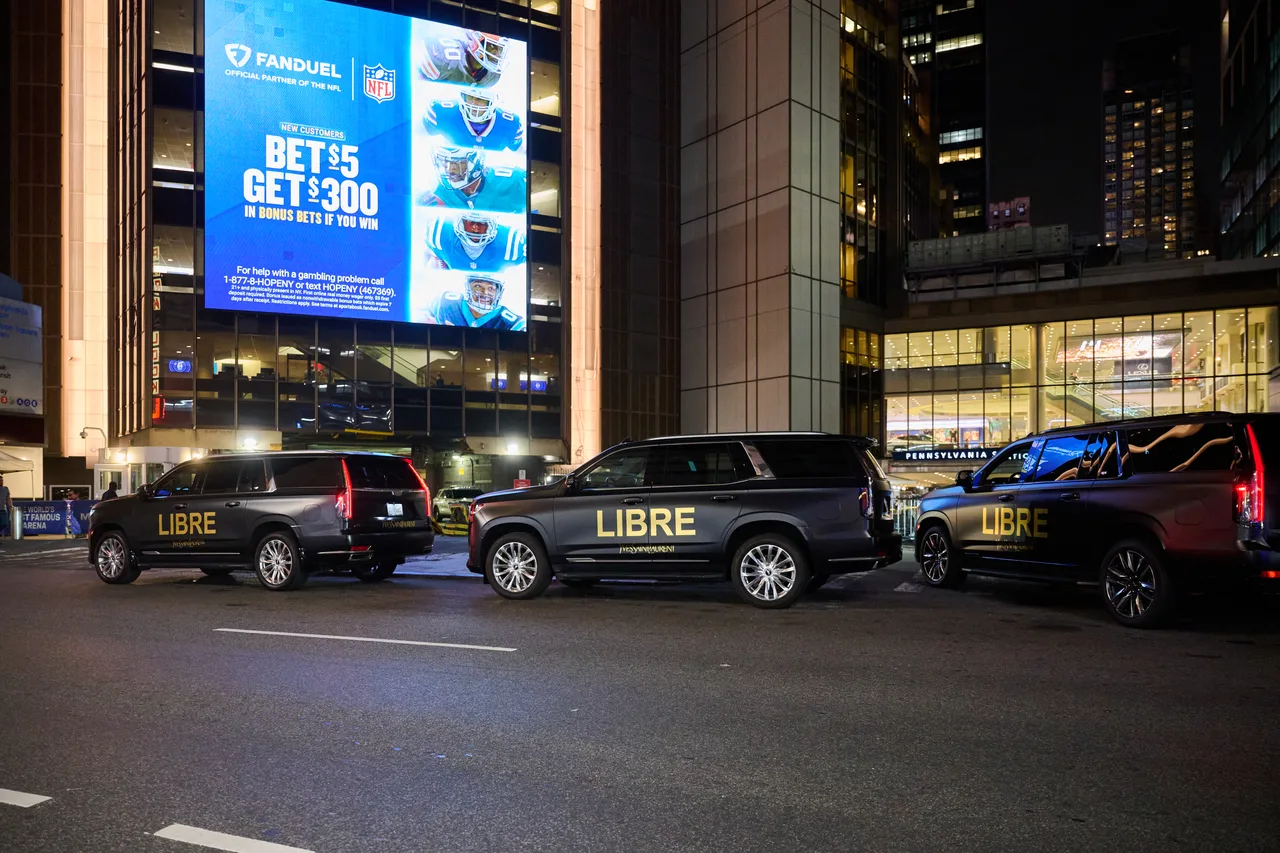
A FanDuel digital billboard on Madison Square Garden above the Pennsylvania Station entrance, September 2025, with a Saint Laurent Libre vehicle fleet below it. OUTFRONT lists the Penn Digital facing MSG among its New York bulletins. Campaign photograph from an operator's archive, used with permission.
Who Owns the Billboards in NYC?
Three national operators own most roadside faces, one franchisee owns the sidewalk, and a longer list shares Times Square. Blue Line Media, which resells inventory across the market, counts 8,873 billboard faces in the New York DMA, 639 of them digital and 8,234 static, and puts the densest single cluster at the Port Authority and 42nd Street corridor with 133 faces (Blue Line Media, New York City Billboard Advertising, retrieved 14 September 2026). That DMA count includes New Jersey, Long Island and Connecticut; the five boroughs are a fraction of it.
| Seller | What it holds in New York, as published | Publishes rates? |
|---|---|---|
| Clear Channel Outdoor | "Over 800 roadside displays throughout the Tri-State area", inventory "on property owned by the Metropolitan Transportation Authority", exclusive access to JFK, LaGuardia, Newark and Stewart airports, and Times Square spectaculars; claims 500 million weekly impressions | No |
| OUTFRONT Media | Bulletins, a Digital Bulletin Network of 13 units, wallscapes, the Penn Digital facing Madison Square Garden, street-level Urban Panels, plus the whole MTA transit concession | No rate card; its New York FAQ prints a $12.43 CPM |
| Lamar Advertising | Billboards, wallscapes, digital and airport media "in all five boroughs, and New Jersey"; New York office at 437 Fifth Avenue | No |
| JCDecaux | The Coordinated Street Furniture Franchise from NYC DOT: "over 3,300 bus shelters", up to 40 automatic public toilets and the city's newsstands, with the right to "sell advertising space on the structures within clearly defined limits" | No |
| Branded Cities | Times Square (MiFi, NASDAQ Tower) plus "Bryant Park, Madison Square Garden, the Port Authority and the Lincoln Tunnel" | No |
| Silvercast, New Tradition, Dream Outdoor, BIG Outdoor and others | Times Square spectaculars; see the fifteen-seller list on the Times Square page | No |
Inventory descriptions are from each seller's own New York page and from NYC DOT's Coordinated Street Furniture page, all retrieved 14 September 2026. Clear Channel's Tri-State page is the one that explains a New York oddity: the billboards along the elevated subway lines and highways on MTA land are sold by Clear Channel, not by OUTFRONT, and the MTA's own advertising page confirms the split. Everything inside the stations is OUTFRONT's, and is covered on the NYC subway advertising page.
Why Are There So Few Billboards in Manhattan?
Because the Zoning Resolution only permits advertising signs in a handful of districts, and then keeps them away from the roads where they would be seen most. In commercial districts, advertising signs are allowed only in C6-5, C6-7 and C8 (Zoning Resolution 32-63, Permitted Advertising Signs, last amended 6 June 2024, read 14 September 2026). In manufacturing districts they are allowed in M1, M2 and M3 under Section 42-62. An advertising sign, in the Department of Buildings' words, "directs attention to goods or services at a location other than the premises where the sign is located"; a sign for the business on the premises is an accessory sign and is treated differently.
Then comes the arterial rule. Section 32-662 states that "no advertising sign shall be located, nor shall an existing advertising sign be structurally altered, relocated or reconstructed within 200 feet of an arterial highway or of a public park with an area of one half acre or more, if such advertising sign is within view of such arterial highway or public park." Beyond 200 feet, the sign must be "at a distance of at least as many linear feet therefrom as there are square feet of surface area on the face of such sign" (Zoning Resolution 32-662, last amended 6 June 2024). The manufacturing-district version, Section 42-65, adds that within the 200-foot band no permitted sign of any kind may exceed 500 square feet (Zoning Resolution 42-65). A 672-square-foot bulletin beyond the band therefore needs to sit at least 672 feet from the highway it faces.
The boards you do see on the expressways are mostly older than the rule. Both sections grandfather advertising signs built before 1 June 1968 within 660 feet of an arterial highway at their 1968 size, and signs built between 1 June 1968 and 1 November 1979 if they do not exceed 1,200 square feet, 30 feet in height and 60 feet in length. That grandfathering is why New York billboard inventory is scarce, why it does not grow, and why a face that comes off the market is often not replaced. Times Square is the mirror image: Section 81-732 requires illuminated signs there, which is why the district has its own page.
The Department of Buildings Register and the Sign Permit
Zoning says where; the Department of Buildings says who and how. Anyone "engaged in the outdoor advertising business must register as Outdoor Advertising Companies (OACs) with the Department", and a registered company must file an inventory of every sign it controls "within 900 feet and in view of an arterial highway" or "within 200 feet and in view of a public park one-half acre or larger" (NYC Buildings, Outdoor Advertising Registration Program, retrieved 14 September 2026). A company operating without registration faces fines "up to $25,000 per day"; signs left off the inventory bring "fines, removal of the signs, and revocation of their registration". The sign itself needs a permit under the Construction Code, with Appendix H governing outdoor signs and licensed sign hangers required for installation (NYC Buildings, Sign, retrieved 14 September 2026).
For a buyer this is a due-diligence question, not paperwork. Ask the seller whether the face is on its DOB inventory and whether the sign permit is current. An unregistered board can be ordered down mid-flight, and the city has shown it will pursue the format wherever it appears: when Ballyhoo Media ran digital billboards on boats along the Hudson, the city sued, and in June 2019 the State Legislature passed a bill banning flashing or moving-light billboards on boats and other advertising signage on vessels within 1,500 feet of shore, with fines of $1,000 for a first violation and $5,000 thereafter (CBS New York, 21 June 2019).
How Much Does Billboard Advertising in New York Cost?
Between $2,000 and $150,000 per four weeks on the published rate cards: Blue Line Media lists a New York static poster at $2,000 to $5,000, a static bulletin at $5,500 to $24,000, a digital bulletin at $7,000 to $24,000 and a wallscape at $20,000 to $150,000, and AdQuick puts a typical NYC metro static bulletin at $5,000 to $25,000 or more (both retrieved 14 September 2026). The three owners publish nothing.
The ranges below are market-level figures compiled from publicly published vendor and industry sources. They are not quotes, and they are not the rates of any single network. Always get a written quote before budgeting.
| Publisher | Unit | Published range, per four weeks | Publisher's stated basis |
|---|---|---|---|
| Blue Line Media (reseller), New York City page | Static poster (medium billboard) | $2,000 to $5,000; average printed as $3,500 | "est."; 373,413 average four-week impressions; CPM $5 to $13 |
| Blue Line Media | Static bulletin, 14 by 48 ft | $5,500 to $24,000; average $14,750 | 2,021,119 impressions; CPM $3 to $12 |
| Blue Line Media | Digital bulletin | $7,000 to $24,000; average $15,500 | 2,835,206 impressions; CPM $2 to $8 |
| Blue Line Media | Wallscape, static | $20,000 to $150,000; average $85,000 | 1,846,571 impressions; CPM $11 to $81; $5,000 minimum spend on every row |
| AdQuick (marketplace) | Typical static bulletin, New York City / NYC metro | $5,000 to $25,000+ | "planning ranges"; "Tier A; premium faces run five figures" |
| AdQuick, national table | Digital billboard, shared rotation | $3,500 to $25,000 | national, not New York; 8-to-10-second spot in a 60-to-90-second loop |
| OUTFRONT Media (owner) | New York billboards | No rate published; FAQ states "a CPM of $12.43" | no unit, period or method given |
| Clear Channel Outdoor, Lamar (owners) | Any New York unit | No price published | quote only |
Read the Blue Line rows with two things in mind. Its own market snapshot spans five-plus counties in New York and New Jersey, so a "New York City" range covers Union County as well as Manhattan, and the site carries a notice that "certain info and images may be AI-generated". Read the AdQuick row knowing that its national format ranges for static bulletins, posters and digital bulletins are identical, figure for figure, to Blue Line's national rate card, which makes them one source, not two. And add production: AdQuick prices vinyl at $1.50 to $3.00 per square foot, about $500 for a 14-by-48-foot bulletin, with posting at $200 to $1,000, and OUTFRONT's New York page says static billboards "require approximately 4 weeks for production and installation". Wallscape production is a separate quote and can exceed the media.
A Digital Billboard in NYC Is a Share of a Loop
OUTFRONT's New York Digital Bulletin Network, 13 units, sells an 8-second spot in a 64-second loop to 8 advertisers, digital static only, no audio (OUTFRONT New York media kit, last revised 10 August 2026). AdQuick describes the national norm as an 8-to-10-second spot in a 60-to-90-second loop. So a digital bulletin priced at $15,500 buys one eighth of a screen, and its CPM is only as good as the impressions assigned to that eighth. Blue Line's own table makes the point in reverse: it prices the New York digital bulletin above the static one and gives it a lower CPM, because it assigns the digital face 2,835,206 impressions against 2,021,119 for the static face without saying how a rotating screen earns 40% more notice.
How Are NYC Billboard Impressions Counted?
By Geopath, which every seller above cites, and whose definitions separate two numbers that vendor decks often merge. Circulation is "a measurement of traffic volume in a market" that "only estimates the number of people with an opportunity to see an Out of Home display". Impressions are "the total number of times people passing an OOH display are likely to notice the ad", built from traffic counts, a visibility adjustment for the board's size, side of road, distance and illumination, and reported weekly (Geopath glossary, retrieved 14 September 2026). A Geopath CPM is "the cost of delivering 1000 impressions from individuals who see the advertising", which is a smaller number than opportunities to see.
The practical test is whether the impression figure is per face or per market. Blue Line prints 2,021,119 four-week impressions for a New York static bulletin, a per-face figure. OUTFRONT's New York FAQ answers "how many impressions do billboards in New York City generate daily" with "a billboard in New York City delivers over 1.4 billion impressions weekly, with a CPM of $12.43", which can only be a market total attached to a single-board sentence. Ask for the Geopath impressions of the specific face, with the period, and divide the price yourself. How the other formats in the city are counted, screen logs against modelled mileage, is set out in the format matrix on the home page.
What to Ask Before You Sign
- Unit: the seller's face ID, the address, the direction it reads and the road it reads to.
- Legality: whether the face is on the seller's Department of Buildings OAC inventory and whether the sign permit is current.
- Unit of sale: a 28-day cycle or a calendar month, and for digital the spot length, loop length and number of advertisers.
- Price basis: media only, or media plus printing, posting and, for wallscapes, rigging.
- Audience: Geopath impressions for that face and that period, not a market total.
- Proof: posting photographs for static, play logs for digital, and who signs them off.
Where a New York billboard sits against the subway, taxi tops, street furniture and the rest, and which agency regulates each, is the decision table on the advertising in New York City page. The moving formats that pass the same intersections are specified on the New York taxi advertising page.
Frequently Asked Questions
How much does it cost to put an ad on a billboard in NYC?
Blue Line Media's New York City rate card lists a static poster at $2,000 to $5,000, a static bulletin at $5,500 to $24,000, a digital bulletin at $7,000 to $24,000 and a wallscape at $20,000 to $150,000, each per four weeks, with a $5,000 minimum spend. AdQuick puts a typical NYC metro static bulletin at $5,000 to $25,000 or more per four weeks. Clear Channel Outdoor, OUTFRONT and Lamar, which own the boards, publish no rates. None of these figures is a quote.
Who owns the billboards in NYC?
Mostly Clear Channel Outdoor, OUTFRONT Media and Lamar for roadside boards and wallscapes, with Clear Channel also holding the billboard rights on MTA property and the region's airports. Street furniture is JCDecaux under a New York City Department of Transportation franchise. Times Square spectaculars are sold by OUTFRONT, Clear Channel, Silvercast, Branded Cities, New Tradition and others. Blue Line Media counts 8,873 billboard faces in the New York DMA, 639 of them digital.
Are billboards legal in New York City?
Yes, but only where zoning allows an advertising sign, which in commercial districts means C6-5, C6-7 and C8 and in manufacturing districts M1 to M3. Within 200 feet of an arterial highway or a public park of half an acre or more, and within view of it, no advertising sign may be built or altered. Beyond 200 feet a sign must sit at least as many feet away as it has square feet of face. Every advertising sign also needs a Department of Buildings permit and a registered Outdoor Advertising Company.
How do I put something on a billboard in New York?
Buy a four-week flight from the owner of the face, from a marketplace such as AdQuick, or from a reseller such as Blue Line Media. Name the unit by ID and direction, get the flight dates and, for digital, the spot length, loop length and number of advertisers in writing, and budget production separately. OUTFRONT says static billboards need approximately four weeks for production and installation in New York; digital is faster.
Is there a 40-dollar billboard at Times Square?
No seller we could find publishes a $40 product. The cheapest published Times Square screen time is the novelty tier documented on this site's Times Square guide: a personal photo shown for 15 seconds once an hour for a day, from $150, on one screen, with no choice of unit and no audience report. It is a gift, not a media buy. Times Square media rates start in the tens of thousands per four weeks.
What is the average cost of a digital billboard in NYC?
Blue Line Media lists a New York digital bulletin at $7,000 to $24,000 per four weeks and prints a $15,500 average; AdQuick's national range for a shared digital rotation is $3,500 to $25,000. A digital board is sold as a share of a loop: OUTFRONT's New York Digital Bulletin Network runs an 8-second spot in a 64-second loop with 8 advertisers, so the price buys one eighth of the screen. Those are published estimates, not quotes.
The Bottom Line
A New York billboard is a scarce, grandfathered, registered object sold by a short list of owners who do not print prices. Use the seller table to know who holds the face, the Zoning Resolution and the DOB register to know whether it is allowed to be there, Geopath's definitions to test the impression figure, and the reseller ranges only as an order of magnitude. Then get the quote, with the face ID and the permit status on it.
What to send us
- The market, or the boroughs
- The dates, or the flight length
- The budget band
- The metric you will judge it by
A person replies with the sellers and formats that fit and the published ranges for them. No rate card exists on this site; every figure here is a third-party published number.
Send the brief
Sources
- Blue Line Media, New York City, NY Billboard Advertising (rate table, impressions, CPMs, $5,000 minimum, 8,873-face market snapshot, AI-generated content notice) · bluelinemedia.com · retrieved 14 September 2026
- AdQuick, How Much Does a Billboard Cost? 2026 Prices & CPM (New York City metro row, digital and format ranges, loop structure, production figures) · adquick.com/billboard-cost · retrieved 14 September 2026
- Clear Channel Outdoor, New York Tri-State Advertising (800-plus roadside displays, MTA-property inventory, airports, Times Square, 500 million weekly impressions; no rates) · clearchanneloutdoor.com · retrieved 14 September 2026
- OUTFRONT Media, New York City Billboards & Subway Advertising (formats, $12.43 CPM FAQ, four-week static production, Penn Digital facing MSG) · outfront.com/markets/new-york-city · retrieved 14 September 2026
- OUTFRONT Media, New York media kit (last revised 10 August 2026; Digital Bulletin Network of 13 units, 8-second spot in a 64-second loop, 8 advertisers; wallscapes) · PDF · retrieved 14 September 2026
- Lamar Advertising, Outdoor Advertising & Billboards in NYC & New Jersey (five boroughs and New Jersey; products; no rates) · lamar.com/nyc · retrieved 14 September 2026
- NYC DOT, Coordinated Street Furniture (Cemusa award, JCDecaux restated agreement, over 3,300 bus shelters, up to 40 automatic public toilets, advertising rights) · nyc.gov/dot · retrieved 14 September 2026
- Branded Cities, New York · brandedcities.com · retrieved 14 September 2026
- MTA, Advertising and activations (Clear Channel Outdoor for billboard locations; OUTFRONT for transit) · mta.info · retrieved 14 September 2026
- New York City Zoning Resolution, Section 32-63, Permitted Advertising Signs (C6-5, C6-7, C8; last amended 6 June 2024) · zr.planning.nyc.gov · read 14 September 2026
- New York City Zoning Resolution, Section 32-662, Additional regulations for advertising signs (200-foot arterial and park rule, distance-for-area rule, 1968 and 1979 grandfathering; last amended 6 June 2024) · zr.planning.nyc.gov · read 14 September 2026
- New York City Zoning Resolution, Section 42-65, Additional Regulations for Signs Near Certain Parks and Designated Arterial Highways (M1 to M3; 500-square-foot cap within 200 feet; last amended 6 June 2024) · zr.planning.nyc.gov · read 14 September 2026
- NYC Buildings, Outdoor Advertising Registration Program (OAC registration, 900-foot and 200-foot inventory rules, $25,000-per-day fines) · nyc.gov/buildings · retrieved 14 September 2026
- NYC Buildings, Sign (accessory versus advertising sign definitions; Construction Code Appendix H; permits and licensed sign hangers) · nyc.gov/buildings · retrieved 14 September 2026
- CBS New York, N.Y. Lawmakers Move To Outlaw Floating Billboards (21 June 2019; 1,500-foot rule; $1,000 and $5,000 fines; Ballyhoo Media) · cbsnews.com · retrieved 14 September 2026
- Geopath, Glossary (circulation, impressions, visibility adjustment, CPM) · geopath.org/glossary · retrieved 14 September 2026